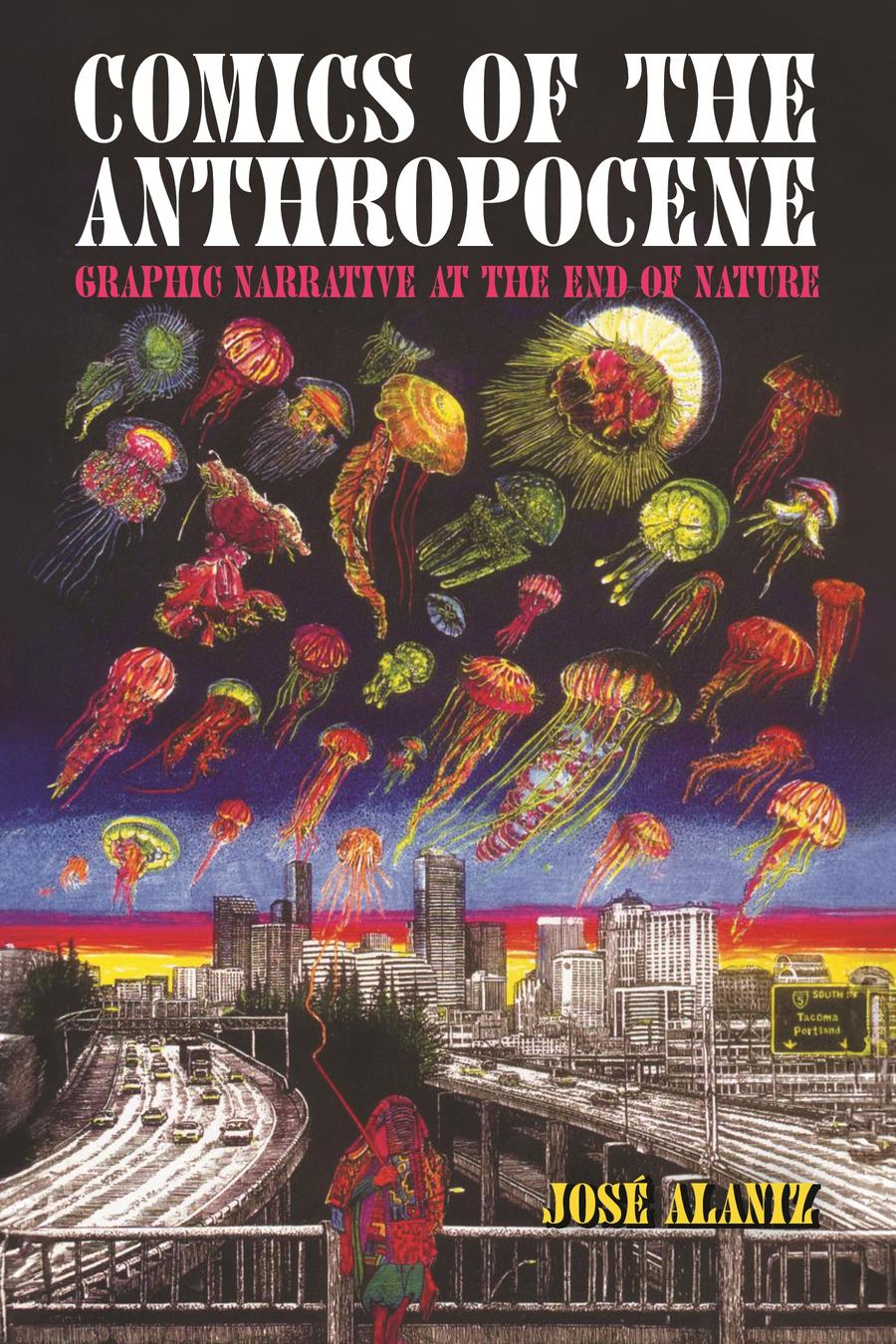
Comics of the Anthropocene
Graphic Narrative at the End of Nature
The first full-length monograph to explore how US comics artists have depicted environmental destruction, mass extinctions, and climate change
Description
Since the first Earth Day in 1970, how have US comics artists depicted the human-caused destruction of the natural world? How do these representations manifest in different genres of comics like superheroes, biography, underground comix, and journalism? What resources unique to the comics medium do they bring to their tasks? How do these works resonate with the ethical and environmental issues raised by global conversations about the anthropogenic sixth mass extinction and climate change? How have comics mourned the loss of nature over the last five decades? Are comics “ecological objects,” in philosopher Timothy Morton’s parlance?
Weaving together insights from comics studies, environmental humanities, critical animal studies, and affect studies to answer these questions, Comics of the Anthropocene: Graphic Narrative at the End of Nature explores the representation of animals, pollution, mass extinctions, and climate change in the Anthropocene Era, our current geological age of human-induced environmental transformation around the globe.
Artists and works examined in Comics of the Anthropocene include R. Crumb, Don McGregor et al.’s Black Panther, Jack Kirby’s Kamandi: The Last Boy on Earth, the comics of the Pacific Northwest, and Stephen Murphy and Michael Zulli’s landmark alternative series The Puma Blues. This book breaks new ground in confronting our most daunting modern crisis through a discussion of how graphic narrative has uniquely addressed the ecology issue.
Reviews
"Comics of the Anthropocene could not be timelier, nor can I imagine anyone better suited to undertake it. This book has it all: close readings of key texts, deft summaries and analyses of relevant literary theory and environmental humanities discourse, excurses into comics history, and powerful meditations on the environment in which the author lives."
- Eliot Borenstein, author of Unstuck in Time: On the Post-Soviet Uncanny and Marvel Comics in the 1970s: The World inside Your Head