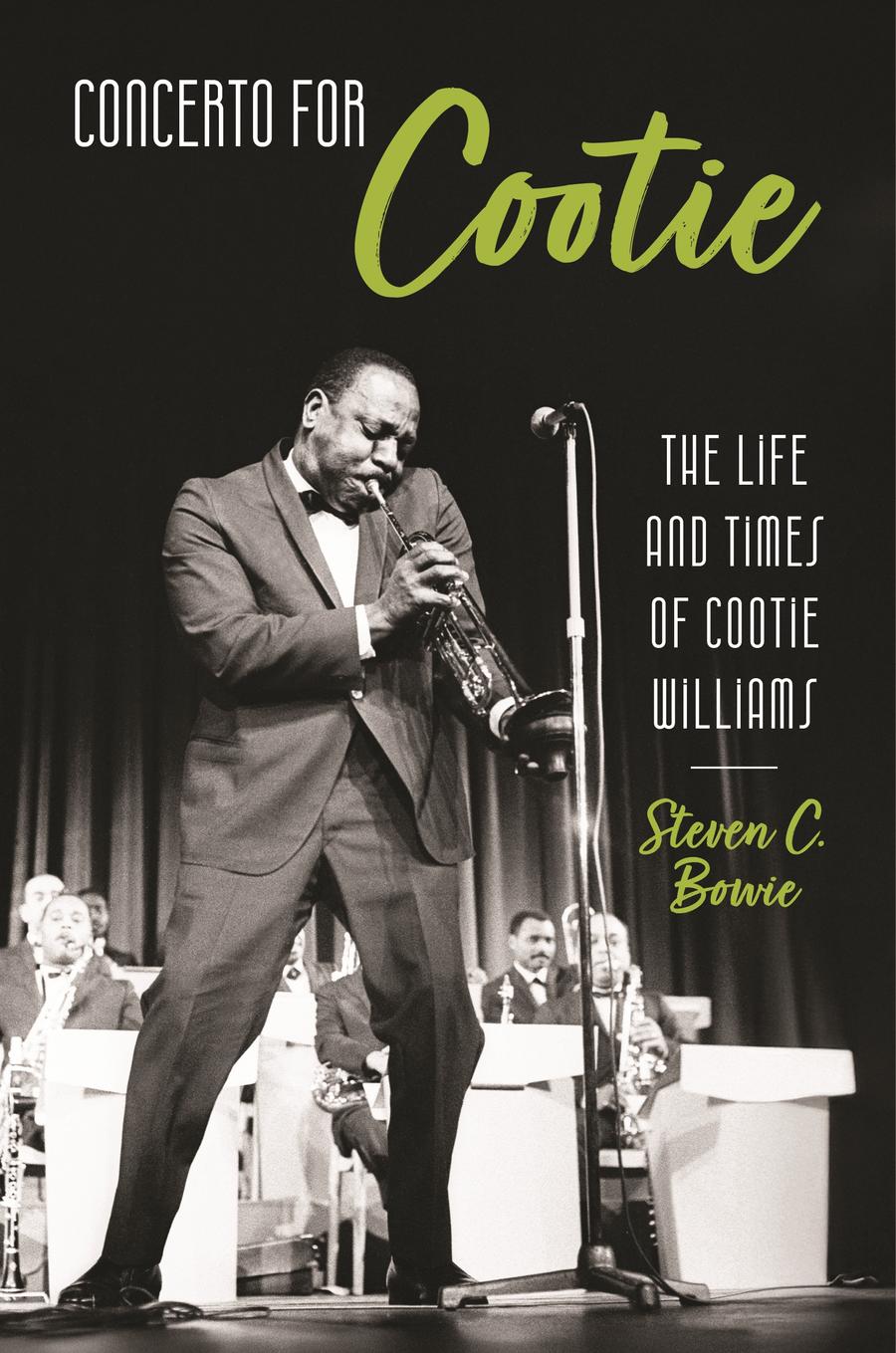
Concerto for Cootie
The Life and Times of Cootie Williams
The first full-length biography of a true giant of jazz
Description
Jazz legend Cootie Williams left home to start his career as a professional musician at the age of fifteen. In 1940, after eleven years as one of the major soloists with the Duke Ellington orchestra, Williams was lured away to the band of Benny Goodman, one of the most popular bands in the country. At the time, it was a controversial move—it was still taboo for African Americans to share the bandstand with white people. Current references reduce it to a song written by Raymond Scott, "When Cootie Left the Duke." In reality, it was a seismic event. The Black press predicted Black bands would collapse from raids on their ranks. White musicians were afraid they would be put out of work. And the white press stirred up visions of Black musicians mixing with white women in the new landscape of integrated orchestras.
The twenty years trumpeter Williams spent as a band leader (1942-1962) have been covered in only the barest of details. His involvement in politics and the civil rights movement have not been detailed before. An astute talent scout, Williams and his band launched the careers of Eddie “Cleanhead” Vinson, Earl “Bud” Powell, Eddie “Lockjaw” Davis, and Pearl Bailey. He also was the first to record the music of a young Thelonious Monk, using two of Monk's compositions (“Epistrophy” and “‘Round Midnight”) as theme songs for his band.
Steven C. Bowie respectfully tells Williams’s story, from his Alabama ancestry onward, including many new details rediscovered from the historical archives of the African American press and those gleaned from the author’s interviews with his friends and colleagues.
Reviews
"Concerto for Cootie is a long-overdue biography of one of the great artists in the history of jazz, trumpeter and bandleader Cootie Williams. Author Steven C. Bowie has expended a seemingly herculean effort to present and document Williams’s life and artistry, deftly setting it within a larger jazz context, as well as placing Williams within his time. The amount of research over fourteen years is staggering, thorough, and prodigious. It is doubtful Bowie missed any reference or account of Williams ever given, in the US and abroad, and presents it in an accessible, clear, sympathetic, and very compelling style. As such, Bowie offers a volume not just on an individual artist, but also on an art form, a people, and a nation."
- Steven L. Isoardi, author of The Dark Tree: Jazz and the Community Arts in Los Angeles
"Among the eight hundred musicians who played in Duke Ellington’s orchestra, Cootie Williams left one of the most enduring legacies. Few trumpeters have combined lyricism, power, and dramatic inflection as Williams did. Steven C. Bowie delivers the meticulously researched and compelling biography that fans of Ellington, trumpet, and jazz have long awaited."
- John Edward Hasse, curator emeritus of American music at the Smithsonian Institution