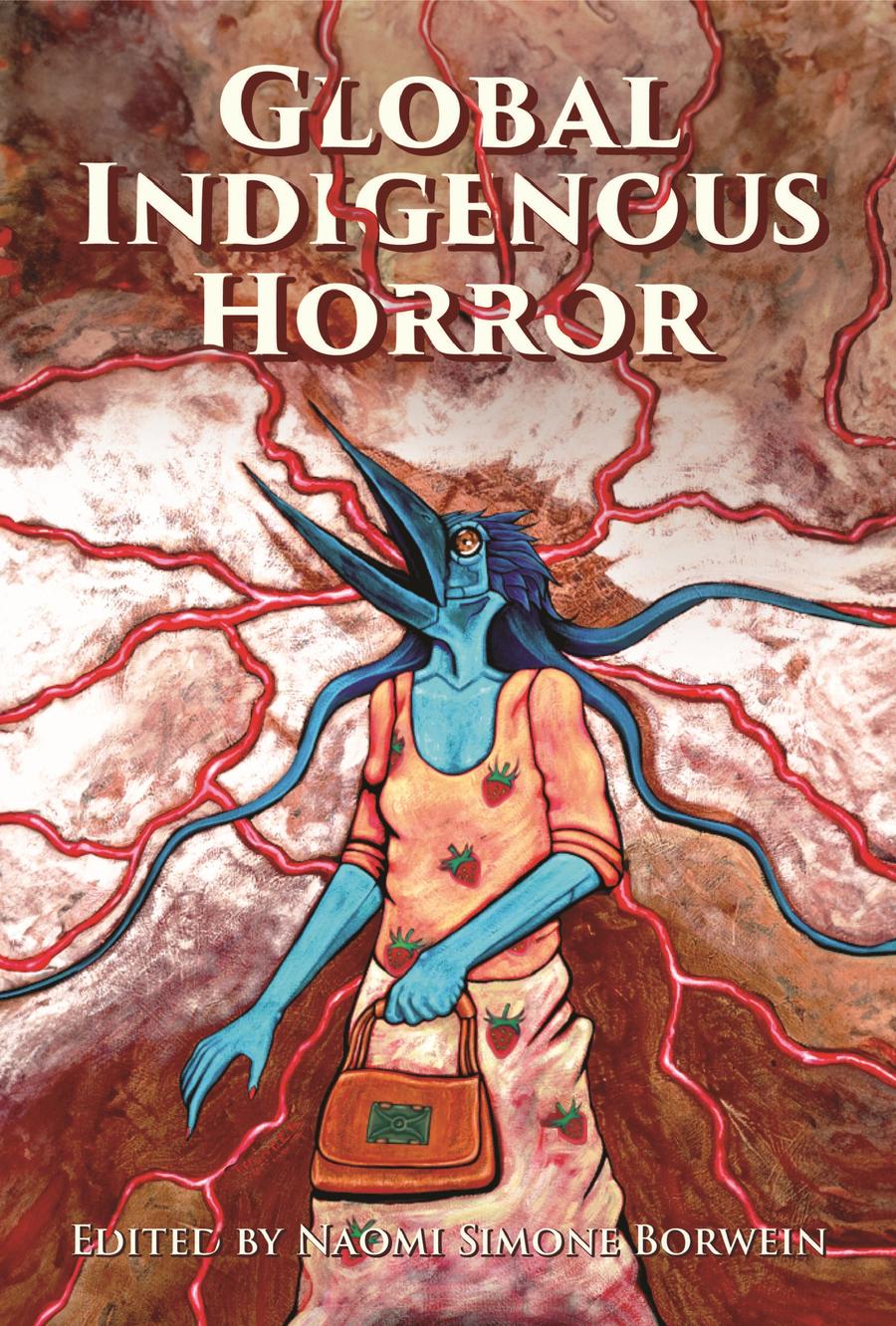
Global Indigenous Horror
The first critical collection to unsettle the horror genre through a contemporary Indigenous gaze
Description
Contributions by Katrin Althans, Jayson Althofer, Naomi Simone Borwein, Persephone Braham, Krista Collier-Jarvis, Shane Hawk, Jade Jenkinson, June Scudeler, and Sabrina Zacharias
Global Indigenous Horror is a collection of essays that positions Indigenous Horror as more than just a genre, but as a narrative space where the spectral and social converge, where the uncanny becomes a critique, and the monstrous mirrors the human. While contentions swirl around the genre category, this exploratory anthology is the first critical edited collection dedicated solely to ways of theorizing and analyzing Indigenous Horror literature. The essays, curated by scholar Naomi Simone Borwein, ask readers to consider what Global Indigenous Horror is—and to whom.
The volume opens with a preface by international bestselling horror writer Shane Hawk (enrolled Cheyenne-Arapaho, Hidatsa, and Potawatomi descent), followed by an overview of Global Indigenous Horror trends, aesthetics, and approaches. The carefully selected contributions explore Indigenous Horror literature and mixed-media narratives worldwide, unraveling the intricate dynamics between the local and global, traditional and contemporary, and human and monstrous. Contributor chapters are grouped not by geographical or cultural variation, but along a spectrum, from a strong emphasis on ways of knowing to a critical inspection of Horror through Indigenous Gothic aesthetics across cultural boundaries and against and beyond nation states.
Reviews
"This volume balances Indigenous theories of narrative and cosmology with Western theories of Gothic and Horror in productive ways, and the contributions give new insights into popular creators while drawing attention to less-well-studied texts that deserve critical attention. Global Indigenous Horror is a timely and welcome addition to the growing field of Indigenous Horror studies."
- Judith Leggatt, associate professor of English at Lakehead University
"Intriguing, engaging, and filled with significant insights into the developing conversation about Global Indigenous Horror, this volume brings together a variety of diverse topics and voices. Global Indigenous Horror challenges settler scholar assumptions and proposes new theories and models for evaluating contemporary Indigenous Horror."
- Cailín E. Murray, associate professor of anthropology at Ball State University
"Perhaps Global Indigenous Horror’s most significant strength is its willingness to embrace complexity. Not only does the book’s structure model the method outlined by Borwein in the introduction, but the collection also resists the pressure to offer singular definitions and refuses to smooth over the frictions between different Indigenous traditions and creative approaches. Instead, Global Indigenous Horror offers its readers a field in motion—a site of ongoing dialogue, contestation, and creation. In doing so, it expands the possibilities of the genre and challenges readers to rethink what horror can do, who it serves, and whose stories it has yet to tell."
- Vanessa Evans, Los Angeles Review of Books