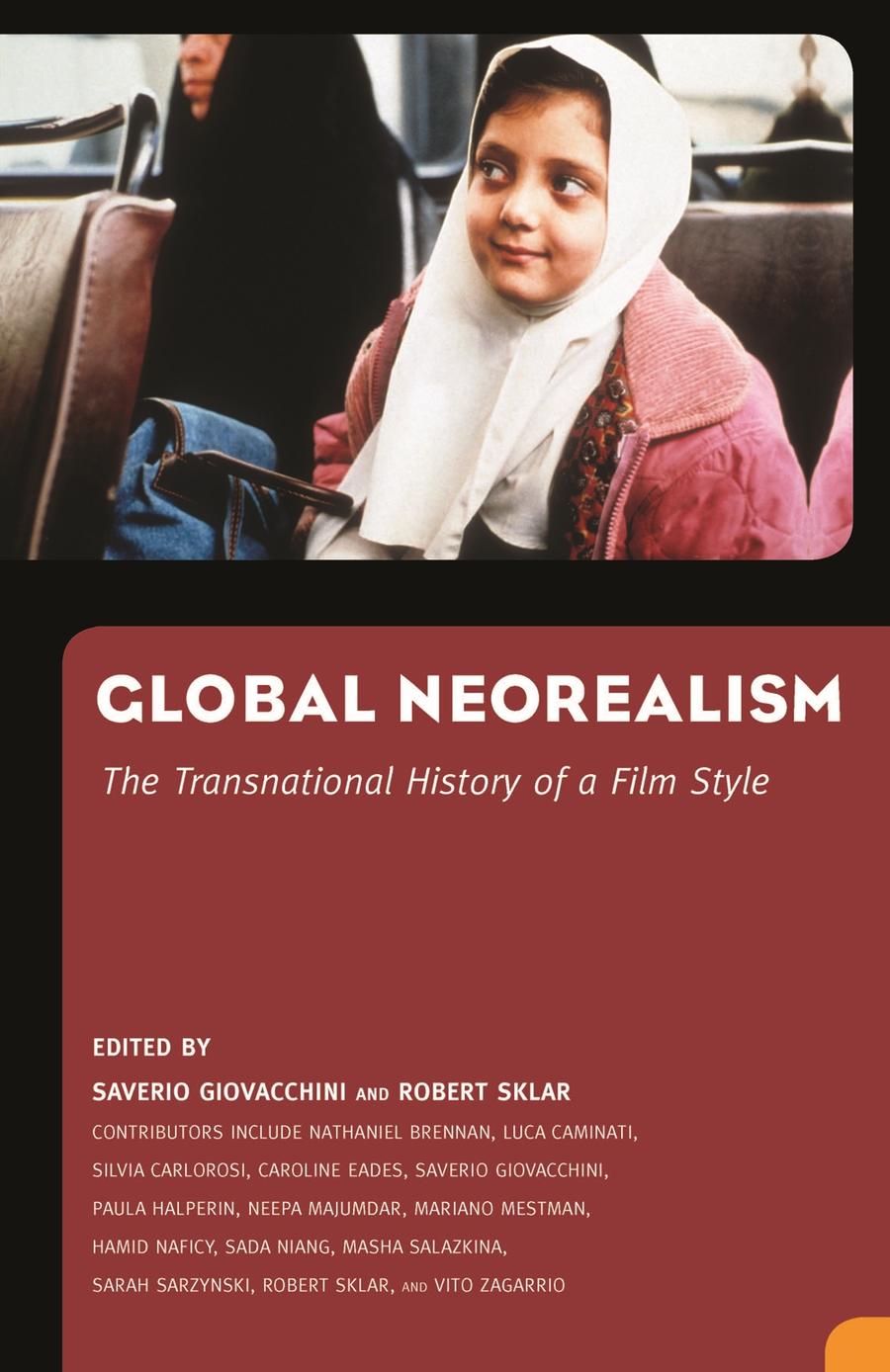
Global Neorealism
The Transnational History of a Film Style
Essays that show the rich variety of Italian neorealism’s many outside sources and influences
Description
Contributions by Nathaniel Brennan, Luca Caminati, Silvia Carlorosi, Caroline Eades, Saverio Giovacchini, Paula Halperin, Neepa Majumdar, Mariano Mestman, Hamid Naficy, Sada Niang, Masha Salazkina, Sarah Sarzynski, Robert Sklar, and Vito Zagarrio
Intellectual, cultural, and film historians have long considered neorealism the founding block of post-World War II Italian cinema. Neorealism, the traditional story goes, was an Italian film style born in the second postwar period and aimed at recovering the reality of Italy after the sugarcoated moving images of fascism. Lasting from 1945 to the early 1950s, neorealism produced world-renowned masterpieces such as Roberto Rossellini's Roma, città aperta (Rome, Open City, 1945) and Vittorio De Sica's Ladri di biciclette (Bicycle Thieves, 1947). These films won some of the most prestigious film awards of the immediate postwar period and influenced world cinema.
This collection brings together distinguished film scholars and cultural historians to complicate this nation-based approach to the history of neorealism. The traditional story notwithstanding, the meaning and the origins of the term are problematic. What does neorealism really mean, and how Italian is it? Italian filmmakers were wary of using the term and Rossellini preferred "realism." Many filmmakers confessed to having greatly borrowed from other cinemas, including French, Soviet, and American.
Divided into three sections, Global Neorealism examines the history of this film style from the 1930s to the 1970s using a global and international perspective. The first section examines the origins of neorealism in the international debate about realist esthetics in the 1930s. The second section discusses how this debate about realism was “Italianized” and coalesced into Italian “neorealism” and explores how critics and film distributors participated in coining the term. Finally, the third section looks at neorealism’s success outside of Italy and examines how film cultures in Latin America, Africa, Asia, and the United States adjusted the style to their national and regional situations.
Reviews
"By recasting the time and geography of Italy's most famous films beyond their familiar sphere of influence, Global Neorealism brilliantly reveals neorealism's breathless range of responses, appropriations, and exchanges. This is transnational scholarship at its best."
- Giorgio Bertellini, author of Italy in Early American Cinema: Race, Landscape, and the Picturesque
"Avoiding the dewy-eyed nostalgia that runs through so much writing on the subject, Sklar and Giovacchini have assembled a superb collection of essays that truly places 'neorealism'—as a political ideology as well as a cinematic style—in an admirably global context."
- Richard Peña, professor of film at Columbia University and director of the New York Film Festival