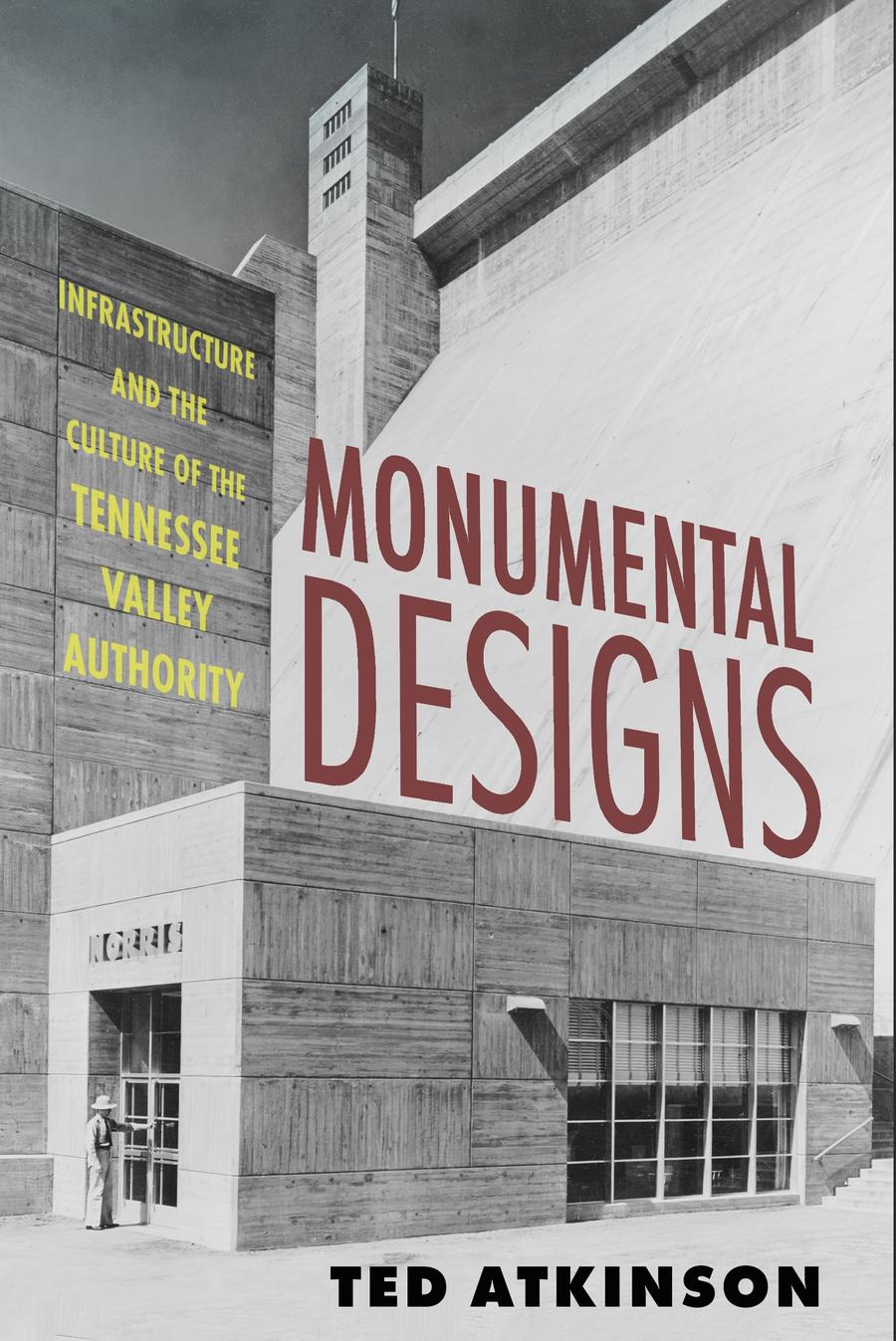
Monumental Designs
Infrastructure and the Culture of the Tennessee Valley Authority
How the Tennessee Valley Authority was represented in photography, films, novels, and other artistic mediums
Description
Established by Congress as part of the New Deal, the Tennessee Valley Authority (TVA) designated parts of seven southern states for economic rehabilitation through various means, including flood control, rural electrification, and social programs. The goal was to deploy federal resources to reshape the region through infrastructure—mainly a network of hydroelectric dams. To garner political and public support, TVA officials mobilized artists. Soon state-sponsored cultural productions emerged, resulting in a body of work comprising an array of mediums. The TVA swayed public opinion and generated positive reviews at the outset because of the vital role that culture played in making public meaning, particularly regarding the near-total transformation of the Tennessee Valley through infrastructural development as part of a larger ideological and economic investment in public works. While the content was geared toward promoting the TVA agenda, aesthetic innovations had a lasting impact, influencing subsequent generations of artists who portrayed the TVA enterprise with complexity, nuance, and depth. At a time when the country is grappling with issues surrounding climate change, fossil fuels consumption, and strip mining, the TVA now struggles to balance its reputation for prosperity and development with public suspicion and skepticism.
In Monumental Designs: Infrastructure and the Culture of the Tennessee Valley Authority, author Ted Atkinson presents a cultural history of the TVA that examines representations of the agency in selected works from the New Deal era to the present. With chapters organized according to medium—photography and photobooks, documentary films, New Deal theater, fiction film, and novels—Monumental Designs seeks to illuminate the entwined forms of infrastructural development and cultural production that have made the TVA a source of multivalent power and influence. This examination of cultural history intends to foster critical thinking about how public works can come to be regarded as monumental expressions of national purpose and modern engines of progress defined in terms of perpetual growth and development.
Reviews
"Deftly combining critical theory, history, and literary/film analysis, Atkinson’s Monumental Designs helps us understand the importance of interrogating the ideological underpinnings of infrastructure, something that is of the utmost importance in the present moment as we decide how to best respond to climate change."
- Matthew M. Lambert, author of The Green Depression: American Ecoliterature in the 1930s and 1940s
"Ted Atkinson’s intriguing study Monumental Designs reveals his purposes in its subtitle, Infrastructure and the Culture of the Tennessee Valley Authority. The author deftly balances the historical development of this massive public works project with its cultural reception as a symbol of modernity within a regional context. His summation of the TVA’s history appears authoritative, and his reading of its shifting cultural image proves impressive and convincing. Promotion of the TVA as a cultural construct begins with that federal agency’s own efforts to sway public opinion through the Depression years, mainly with documentary photography and photobooks. Also in the 1930s, other progressive projects bolstered its public image, including documentary film, especially Pare Lorentz’s The River and the Federal Theatre Project’s agitprop drama Power. Atkinson transitions to more critical views of the TVA in the 1960s and after with movies like Elia Kazan’s Wild River and novels such as Robert Penn Warren’s Flood. These critical insights are carefully grounded in the latest scholarship and insightfully crafted into new readings of accepted cultural documents. In my view, Ted Atkinson’s Monumental Designs is in all regards a significant contribution to American and Southern studies."
- Joseph R. Millichap, professor emeritus of English, Western Kentucky University