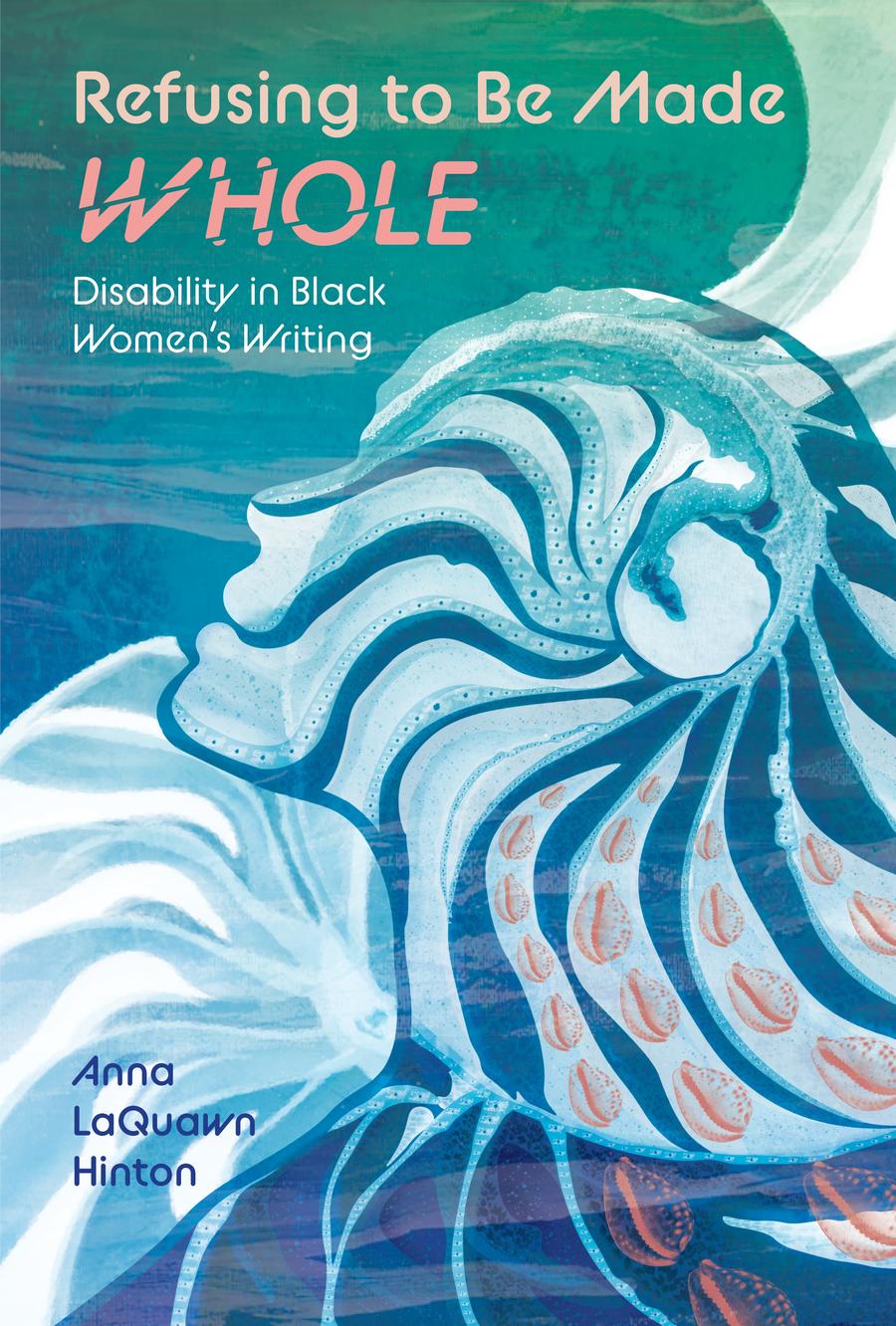
Refusing to Be Made Whole
Disability in Black Women's Writing
A cross-disciplinary analysis of how Black women writers theorize disability and Black womanhood
Description
In Refusing to Be Made Whole: Disability in Black Women’s Writing, author Anna LaQuawn Hinton examines how contemporary Black women writers present becoming disabled as a traumatic and violent experience of Black womanhood. Nevertheless, Black women embrace disabled Black womanhood by turning to Africanist spiritual understandings of wholeness, which view debilitating injury and illness as not only physical but also spiritual, not just an individual problem but a symptom of discord in the community. Black women use these belief systems to reimagine healing in ways that make space for a variety of bodymindspirits. Hinton maintains that this is not only a major theme in contemporary Black women’s writing but that it also shapes the formal elements characteristic of the Black women’s literary tradition.
Refusing to Be Made Whole analyzes texts published after the civil rights movements of the 1950s and 1960s, focusing particularly on the late 1970s onward when Black women’s writing flourished. Through the lens of writings by authors such as Toni Cade Bambara, Gayl Jones, Gloria Naylor, Ntozake Shange, Audre Lorde, Alice Walker, Toni Morrison, Octavia Butler, Sapphire, and Sarah E. Wright, Hinton addresses prominent critical discourses within Black feminist literary studies. Hinton approaches the intersections of Africanist spirituality, race, gender, class, and disability, conversations about representation, community, motherhood, and sexuality through a Black feminist disability studies framework. Refusing to Be Made Whole embraces the complex and multifaceted nature of Black women’s writing, arguing that through this collision of race, gender, and spirituality, Black women writers speak healing and wellness into their readers’ lives and their own.
Reviews
"Refusing to Be Made Whole is an important intervention in Black feminist literary studies and disability studies. This book offers a new reading of well-known Black women writers that reveals possibilities reimagining selfhood, healing, and resilience."
- Jagravi Dave, Brittle Paper
"Refusing to Be Made Whole takes seriously the Black feminist reckoning with disability, providing an apt guide to the tradition using the tenets of Black disability studies. This book deftly rereads the Black feminist literary tradition with an eye toward disability, and it was an absolute joy to read. Simply put, this is the book all Black feminist and disability scholars need."
- Therí A. Pickens, author of Black Madness: Mad Blackness
"Anna LaQuawn Hinton’s Refusing to Be Made Whole: Disability in Black Women’s Writing brings together—and extends—theoretical paradigms from disability studies, Black studies, feminist studies and queer studies through careful, innovative readings of canonical and lesser-known texts written by Black women, demonstrating how the contemporary literature of Black women and the theoretical work of disability studies are mutually transformative when engaged together. This rich and exciting work showcases the author’s deep engagement with (and sense of accountability to) multiple scholarly fields, and anyone writing on any of the authors discussed here—even if they are not a disability scholar—should consult this book in the future."
- Julie Avril Minich, author of Radical Health: Unwellness, Care, and Latinx Expressive Culture
"Hinton brings together Black disability and African spiritualist visions to reconsider how contemporary Black women writers depict identity. She notes that Black women writers present becoming disabled as a traumatic, violent experience and turn to spirituality because disability is both spiritual and communal and physical and individual. Hinton confronts these tensions within the Black community to show how these writers create healing and wellness and celebrate Black women’s resilience and strength against white supremacy and misogyny. This text asks scholars of African American literature and culture to reassess disability as fundamental to understandings of Black womanhood and Black spirituality."
- D. E. Magill, CHOICE