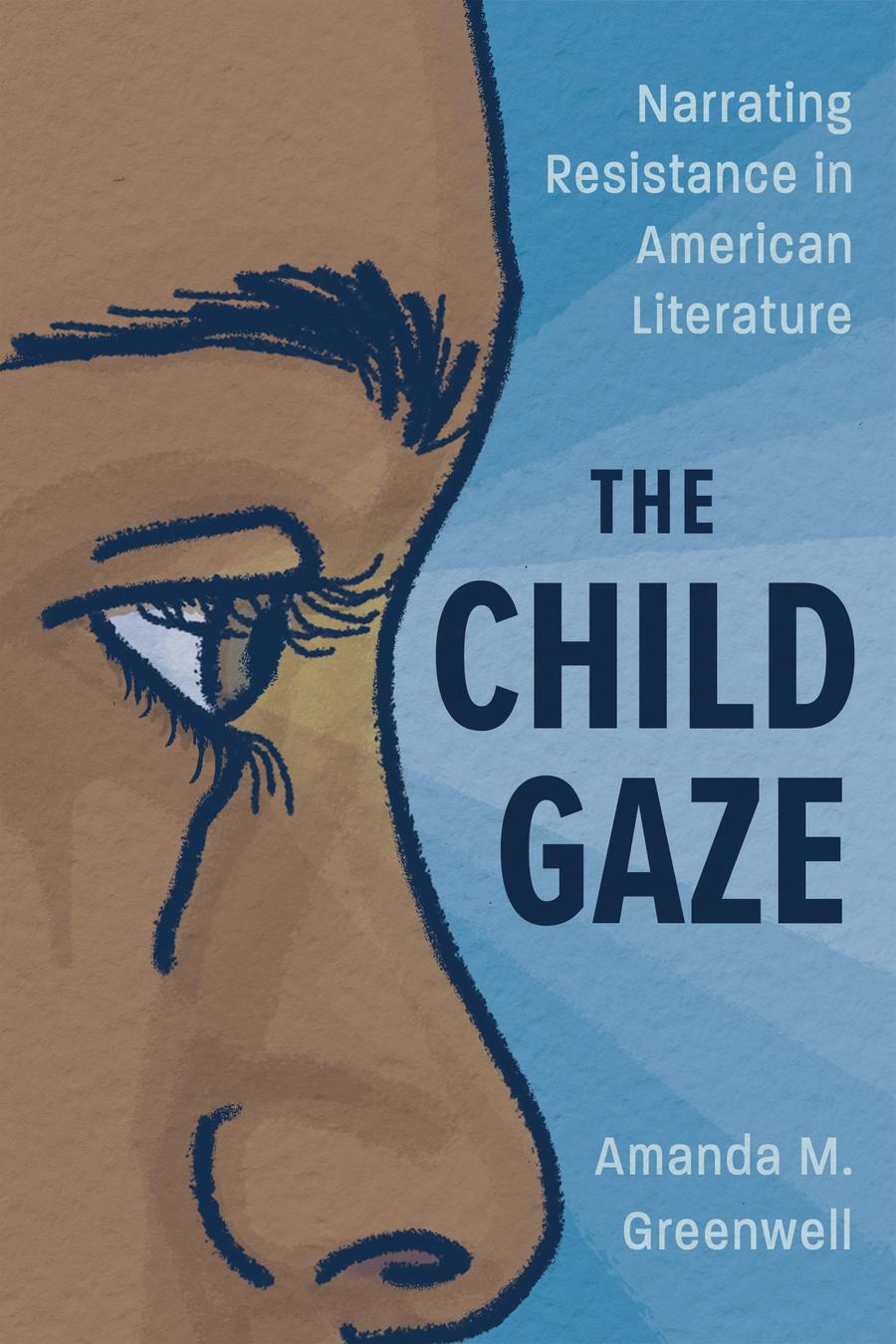
The Child Gaze
Narrating Resistance in American Literature
A compelling study centered on the eyes of children and their powerful lines of sight
Description
The Child Gaze: Narrating Resistance in American Literature theorizes the child gaze as a narrative strategy for social critique in twentieth- and twenty-first-century US literature for children and adults. Through a range of texts, including James Baldwin’s Little Man, Little Man, Mildred D. Taylor’s Roll of Thunder, Hear My Cry, Toni Morrison’s The Bluest Eye, Gene Luen Yang’s American Born Chinese, and more, Amanda M. Greenwell focuses on children and their literal acts of looking. Detailing how these acts of looking direct the reader, she posits that the sightlines of children serve as signals to renegotiate hegemonic ideologies of race, ethnicity, creed, class, and gender. In her analysis, Greenwell shows how acts of looking constitute a flexible and effective narrative strategy, capable of operating across multiple points of view, focalizations, audiences, and forms.
Weaving together scholarship on the US child, visual culture studies, narrative theory, and other critical traditions, The Child Gaze explores the ways in which child acts of looking compel readers to look at and with a child character, whose gaze encourages critiques of privileged visions of national identity. Chapters investigate how child acts of looking allow texts to redraw circles of inclusion around the locus of the child gaze and mobilize childhood as a site of resistance. The powerful child gaze can thus disrupt dominant scripts of power, widening the lens through which belonging in the US can be understood.
Reviews
"By taking seriously the destabilizing power of marginalized children’s gazes, this work makes a striking contribution to the study of multiethnic literatures—one that is gravely necessary. "
- Rudrani Sarma, Children and Society
"Carefully structured, tightly focused, this study persuasively argues that the child gaze can create interventions ‘in narrow paradigms that need to be widened and dangerous hierarchies that need to be flattened.’"
- Michael W. Thomas, Writing in Education
"The Child Gaze intervenes in assumptions about the role of the child in fiction for young readers and adults alike and articulates important insights about the real-world implications of attending to the child’s gaze in the texts we read. This is a text that will change understanding and start conversations."
- Sara K. Day, author of Reading Like a Girl: Narrative Intimacy in Contemporary American Young Adult Literature
"The Child Gaze offers a transformative contribution to narrative theory and children’s literature studies . . . [and] illuminates how the smallest observers can cast the longest shadows over cultural narratives."
- Jianli Jiang and Wenli Li, International Research in Children’s Literature
"“The Child Gaze offers a transformative contribution to narrative theory and children’s literature studies.”"
- Jianli Jiang and Wenli Li, International Resesarch in Children's Literature