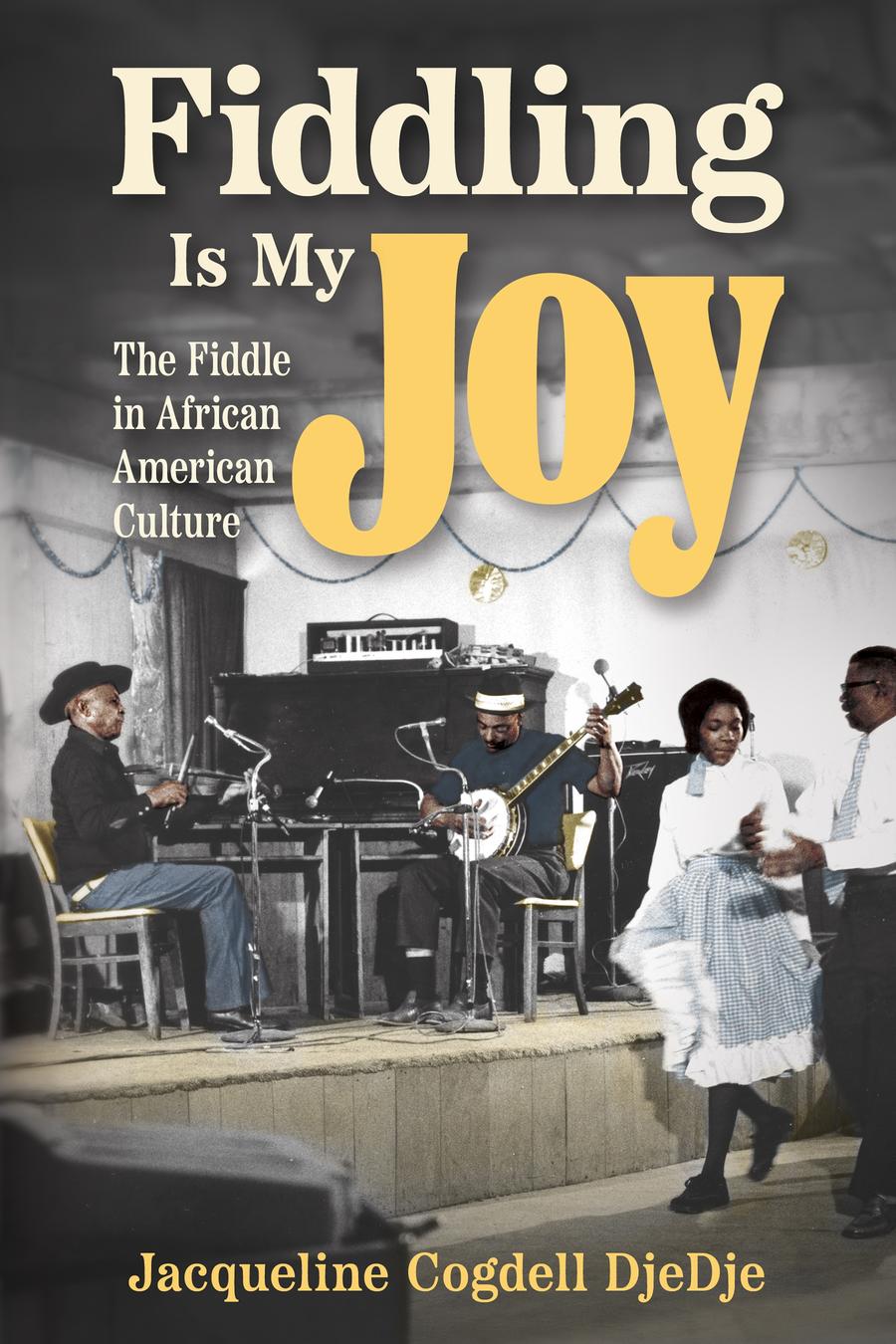
Fiddling Is My Joy
The Fiddle in African American Culture
A thorough examination of the history and legacy of African American fiddling
Description
In Fiddling Is My Joy, Jacqueline Cogdell DjeDje examines the history of fiddling among African Americans from the seventeenth to the mid-twentieth century. Although music historians acknowledge a prominent African American fiddle tradition during the era of slavery, only recently have researchers begun to closely examine the history and social implications of these musical practices. Research on African music reveals a highly developed tradition in West Africa, which dates to the eleventh or twelfth century and continues today. From these West African roots, fiddling was prominent in many African American communities between the seventeenth and nineteenth centuries, and the fiddle became an important instrument in early twentieth-century blues, jazz, and jug bands. While less common in late twentieth-century African American jazz and popular music groups, the fiddle remained integral to the musicking of some Black musicians in the rural South.
Featured in Fiddling Is My Joy is access to a comprehensive online eScholarship Companion that contains maps, photographs, audiovisual examples, and other materials to expand the work of this enlightening and significant study. To understand the immense history of fiddling, DjeDje uses geography to weave together a common thread by profiling the lives and contributions of Black fiddlers in various parts of the rural South and Midwest, including the mountains and along the Atlantic and Gulf coasts. In addition to exploring the extent that musical characteristics and aesthetics identified with African and European cultures were maintained or reinterpreted in Black fiddling, she also investigates how the sharing of musical ideas between Black and white fiddlers affected the development of both traditions. Most importantly, she considers the contradiction in representation. Historical evidence suggests that the fiddle may be one of the oldest uninterrupted instrumental traditions in African American culture, yet most people in the United States, including African Americans, do not identify it with Black music.
Reviews
"A monumental contribution to the history of secular Black music and to the overlapping complete history of American fiddling."
- Chris Goertzen, author of Rugs, Guitars, and Fiddling: Intensification and the Rich Modern Lives of Traditional Arts
"I have been waiting for a book like this for several decades and am impressed by DjeDje’s broad intercontinental, cross-cultural vision and her authoritative research. Fiddling Is My Joy: The Fiddle in African American Culture not only embraces the complex, fascinating relationships among Black fiddle traditions in West Africa and those that emerged in the United States, it does so masterfully, comprehensively, and over the sweep of several centuries."
- Kip Lornell, author of Exploring American Folk Music: Ethnic, Grassroots, and Regional Traditions in the United States
"The details of the Black American fiddle tradition, the frequency of Black-white musical exchange involving fiddle and banjo, and the number and geographical distribution of Black fiddlers have been treated by music scholars only in passing, or presented in narrow case studies, resulting in a fragmented picture. Thus, an overall portrait of Black American fiddling has remained obscure until DjeDje’s remarkably comprehensive research which, gathered together in this volume, offers original argument as well as overwhelming evidence from a great many sources."
- Jeff Todd Titon, professor emeritus of music at Brown University and author of Old-Time Kentucky Fiddle Tunes